Session 3 / Keep Improving the System 1 / 23 · Section 03

Field Guide · v1.0 · Session 3

Keep Improving the System

The system improves one real project at a time.

Session 3  ·  June 2026  ·  3 hours  ·  onsite at IMC


Session 3 / Outcomes 2 / 23 · Section 03

By the end of this session

  • 01Ways of working evolution — Mindset drive practices & theory of constraints.
  • 02Kanban Guide — Lean Process & Kanban Board.
  • 03Improve continuously — PDCA, Deming Cycle, PDSA & planning layers.


The idea
Practices change forever — principles don't. Today you don't learn a framework to copy.
You learn to improve your system continuously.
Session 3 / Evolution 3 / 23 · Section 03

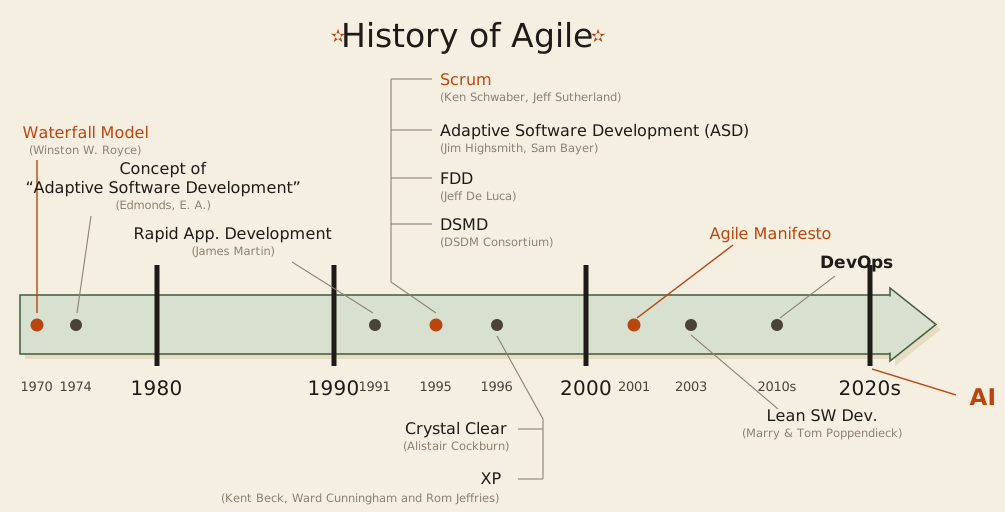
Ways of working keep evolving

PM, Agile and ways-of-working evolution timeline: Waterfall to Agile/DevOps to AI
Your practices must keep evolving with your context.
Session 3 / Evolution / Mindset drives practices 4 / 23 · Section 03

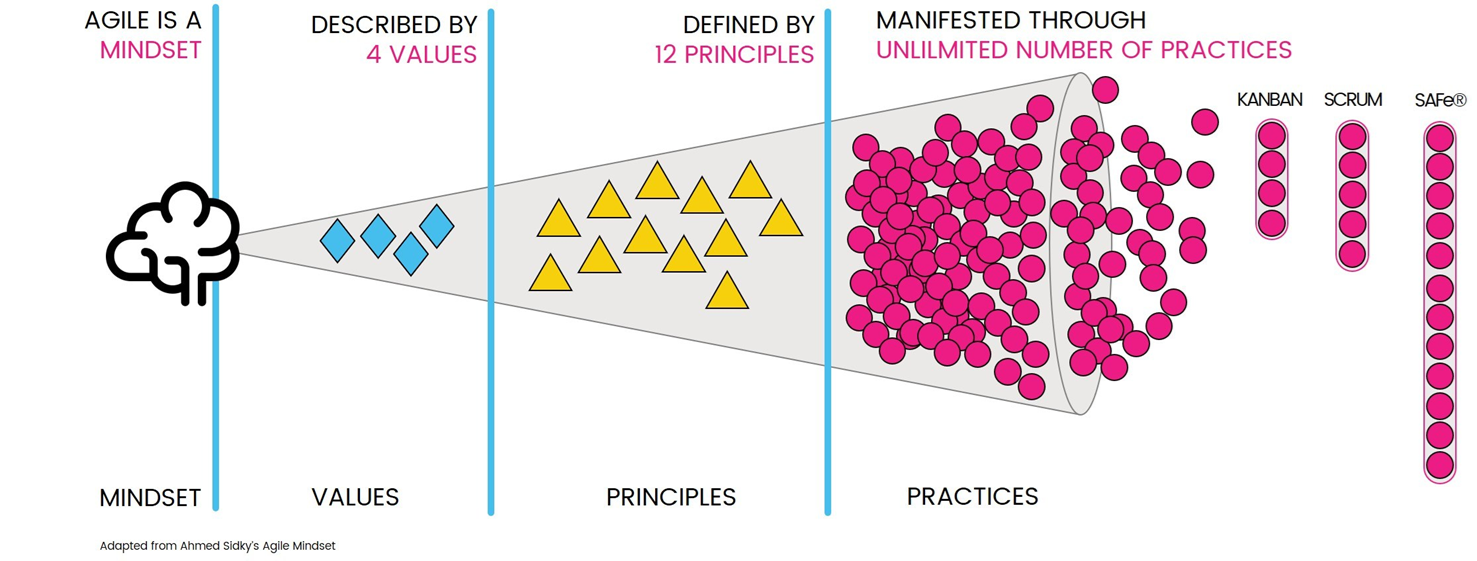
Practices change. Mindset stays.

Agile mindset pyramid: mindset described by values, guided by principles, manifested through unlimited practices
Session 3 / Evolution / Theory of Constraints 5 / 23 · Section 03

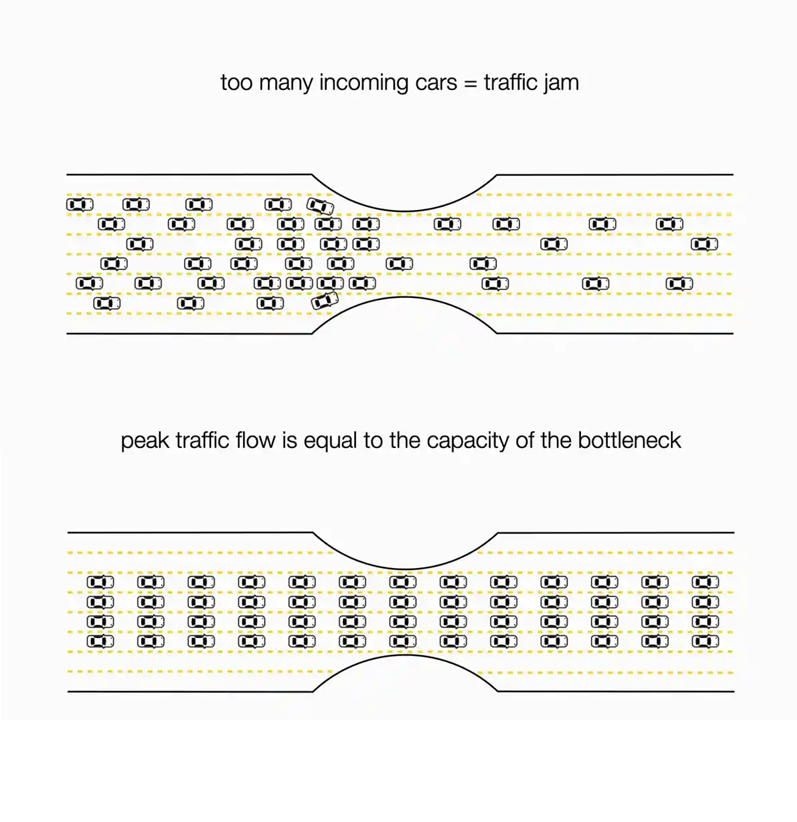
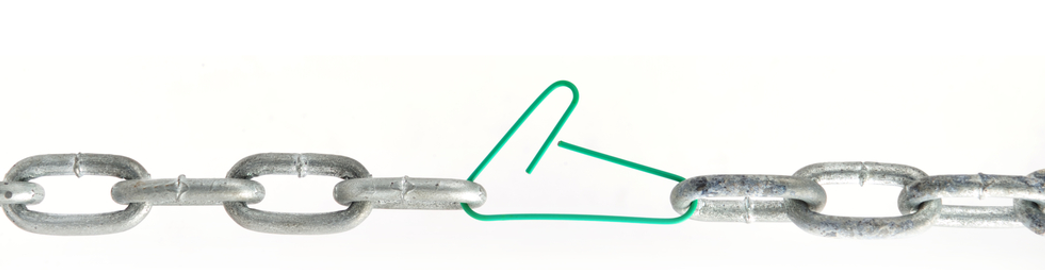
A chain is no stronger than its weakest link

Every system has one constraint — the bottleneck that governs the whole output. Improving anything that isn't the constraint doesn't speed up the system.

The leap: you manage bottlenecks on the production line every day. A project has them too — but they're usually a handoff between departments, not a machine.
From your survey
"Each dept rushes its own part" is a subordination failure. Speeding up a non-constraint department makes the whole system worse, not better.
Chain — weakest link highlighted
Session 3 / Theory of Constraints / Group Discussion 6 / 23 · Section 03

Thảo luận nhóm - Bài Toán Quán Phở

Mỗi tô phở trải qua 3 bước:

  • Trần bánh phở: 1 phút
  • Xếp thịt và chan nước dùng: 30 giây
  • Mang tô ra cho khách: 3 phút

1 người trần bánh phở, 1 người xếp thịt và chan nước dùng, và 2 người phục vụ khách.

Câu hỏi
  1. Mất bao lâu để hoàn thành một tô phở?
  2. Nếu làm 100 tô và tất cả mọi người đều làm việc hết công suất, điều gì sẽ xảy ra?
  3. Nếu có thể thêm một nhân viên, vị trí nào nên được tăng cường?
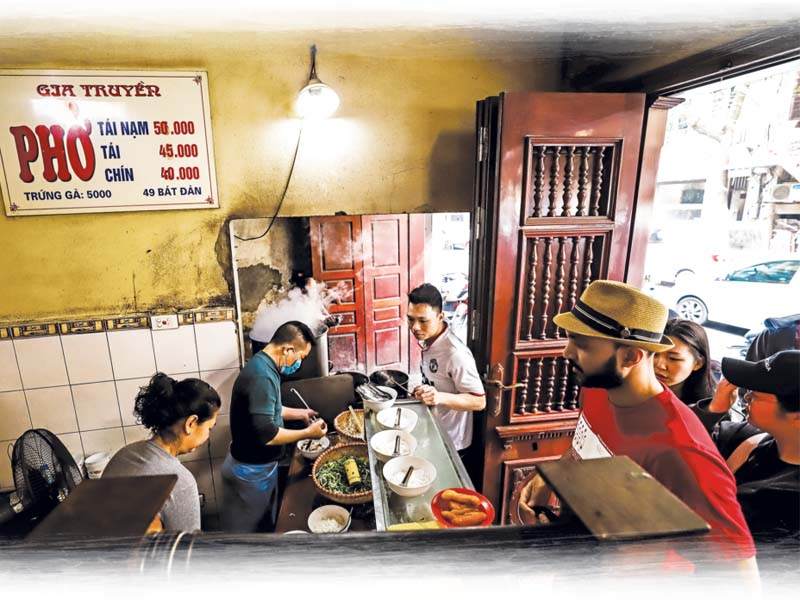
Theory of Constraints — pho restaurant bottleneck activity
Session 3 / Theory of Constraints / Focus where it counts 7 / 23 · Section 03

Focus beats effort

Changing most variables produces only small global impact. A few — the constraints — move everything. Don't spread improvement thin.

Five focusing steps:

  • 1Identify the constraint
  • 2Exploit it — get the most from it as-is
  • 3Subordinate everything else to it
  • 4Elevate it — add capacity if still needed
  • 5Repeat — the constraint will move
The takeaway
Fix the weakest link — not the loudest one.
Theory of Constraints — few variables drive global performance; focus on the constraints
Session 3 / Kanban Guide 8 / 23 · Section 03

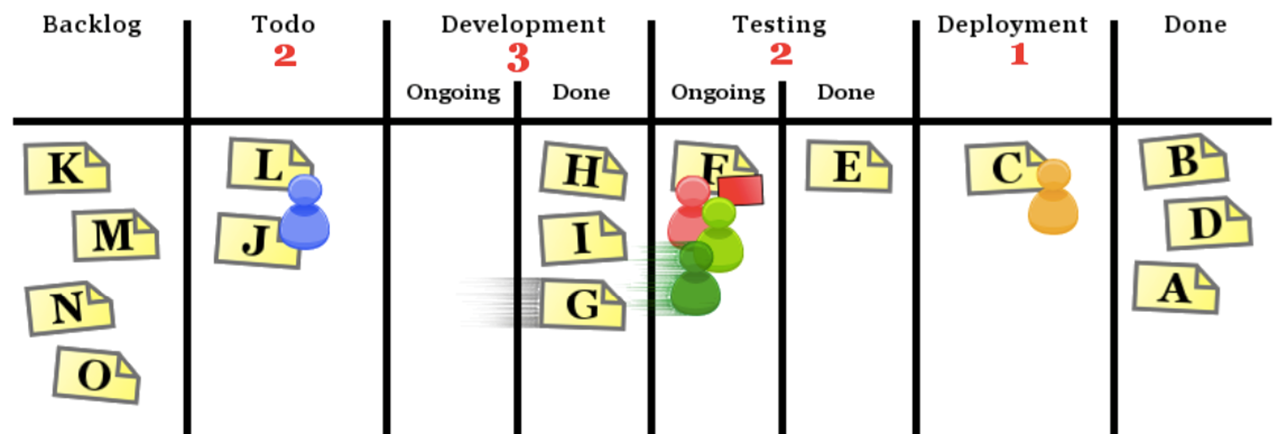
Kanban — a strategy for the flow of value

Kanban is not the sticky notes — it is a strategy for optimizing the flow of value through a process, built on three practices that only work in tandem:

  • 1Define and visualize a workflow
  • 2Actively manage items in the workflow
  • 3Improve the workflow

Together, these three practices form a Kanban system.
Why it matters
"Flow of value" is the point — not busyness. A board that looks fully loaded but stalls at a handoff is not flowing value.
The three Kanban practices in tandem — defining and visualizing a workflow, actively managing items, and improving the workflow — together forming a Kanban system
Session 3 / Kanban Guide / Father of Kanban 9 / 23 · Section 03

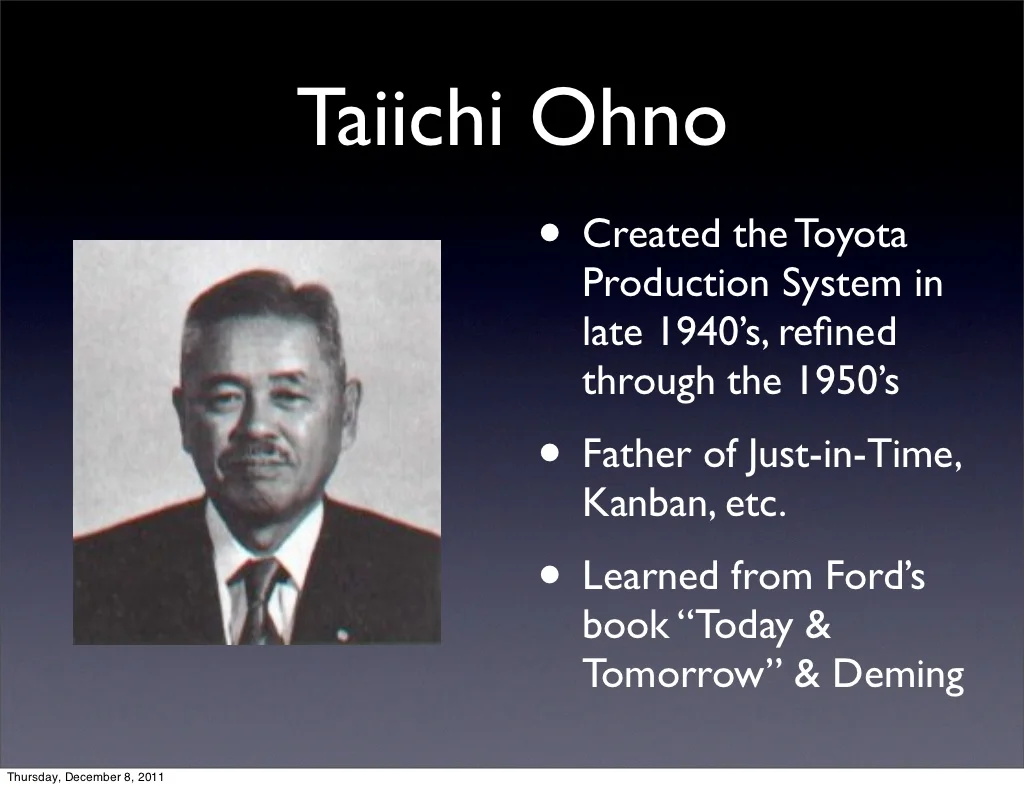
The father of Kanban

Taiichi Ohno — father of the Toyota Production System and Kanban

Taiichi Ohno (1912–1990) was a Toyota executive who created the Toyota Production System (TPS) — the foundation of both Lean and Kanban.

  • Designed Kanban as a pull signal: produce only what the next stage needs, when it needs it.
  • Treated the factory floor as a living system — go see the bottleneck, don't manage from a desk.
  • His discipline: stop the line the moment a defect appears — fix it now, don't let it flow downstream.
The core idea
"All we are doing is looking at the time line, from the moment the customer gives us an order to the point when we collect the cash. And we are reducing that time line." — Taiichi Ohno
Session 3 / Kanban activity 10 / 23 · Section 03

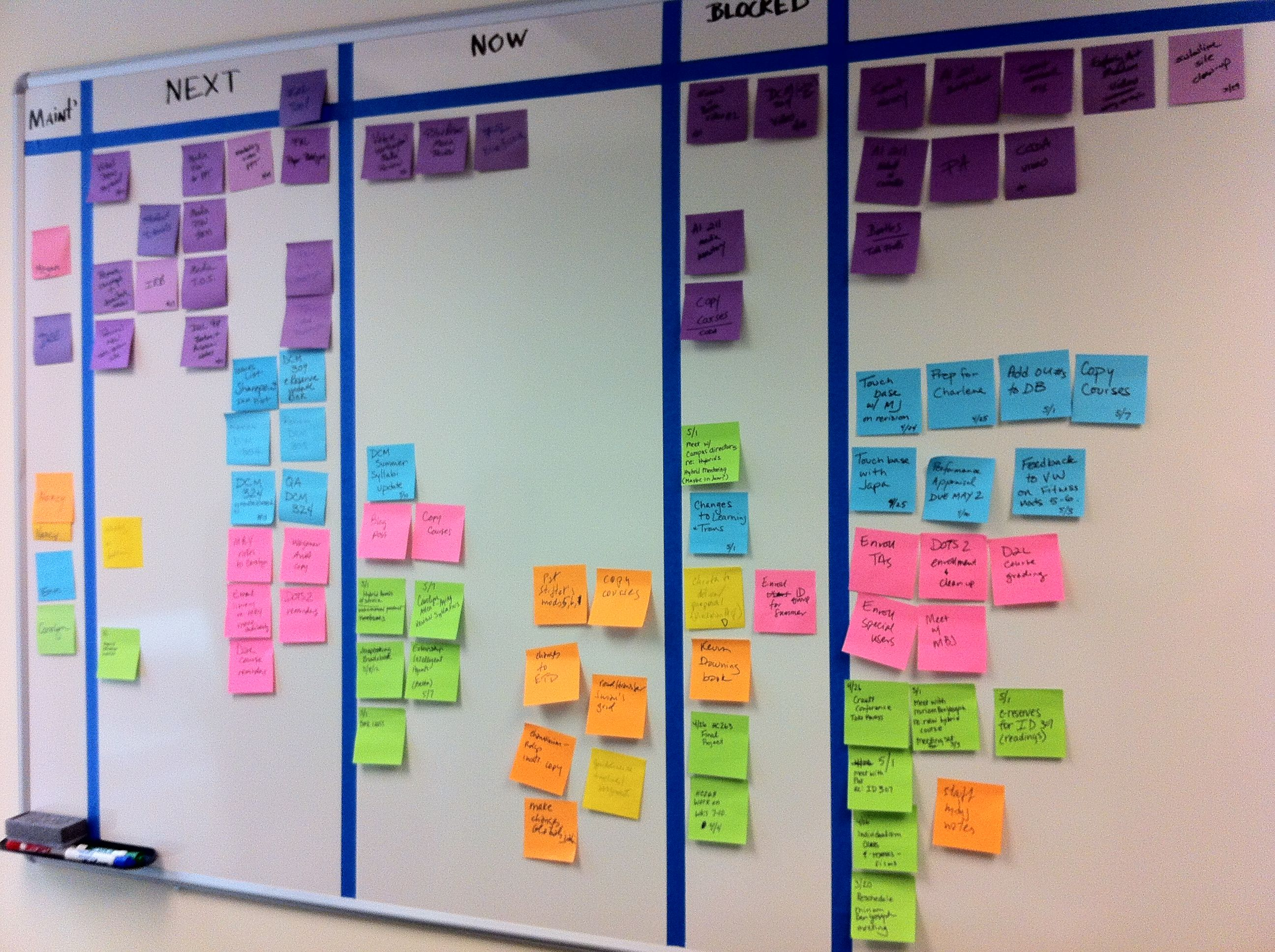
Activity — see your flow, find your bottleneck

Each group takes a real project.

  • 1Visualize the workflow — columns To Do · In Progress · Done (add real stages: Design, Approve, Build, QA). Put this week's real items on cards.
  • 2Set a WIP limit — cap each column. Notice what you must stop starting.
  • 3Find the bottleneck — where do cards pile up / wait longest? That's your constraint.
  • 4Make policies explicit — one rule for how a card moves to the next column.
The pile is the point
Where cards wait is where your project is actually losing days — usually a handoff, exactly what the survey flagged.
Kanban method group activity — board with To Do / In Progress / Done, WIP limits, explicit policies
Session 3 / Theory of Constraints / The Lean way 11 / 23 · Section 03

Lean: maximise value, eliminate waste
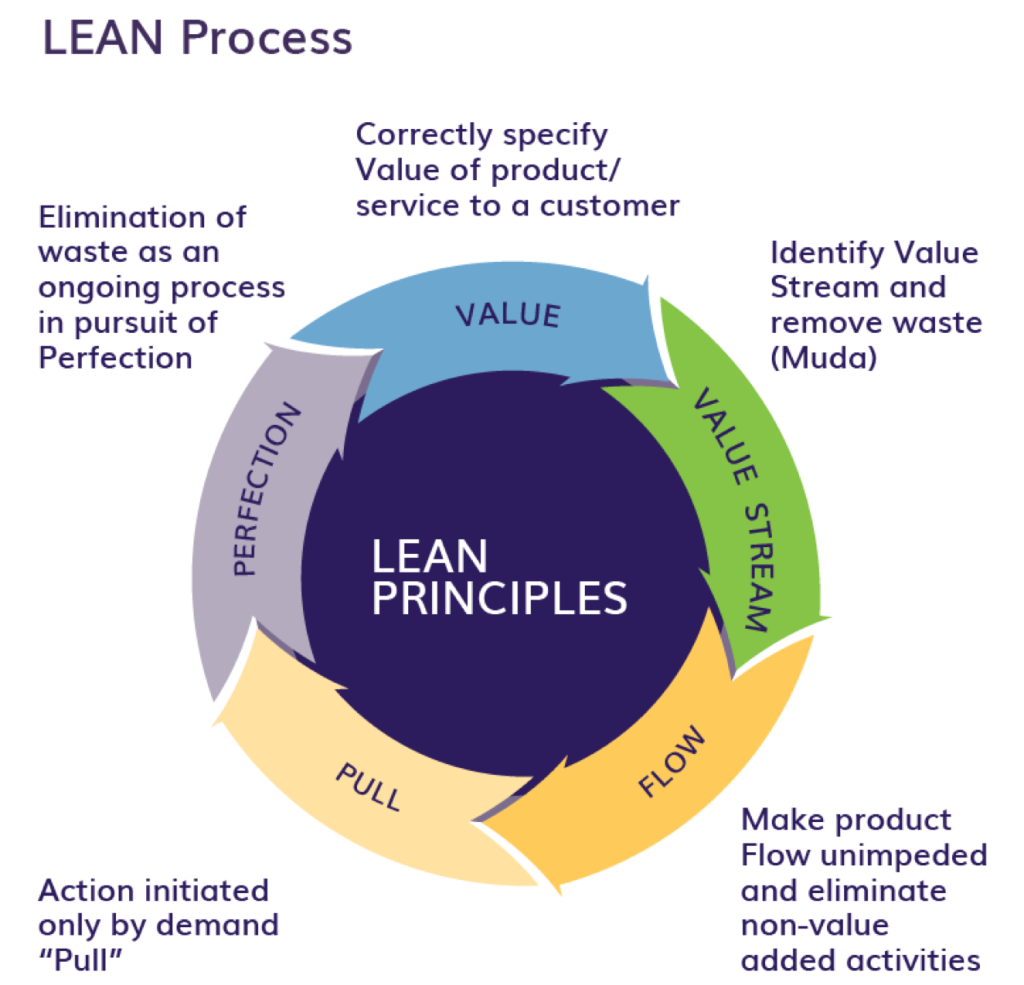
Lean principles

5 Lean principles

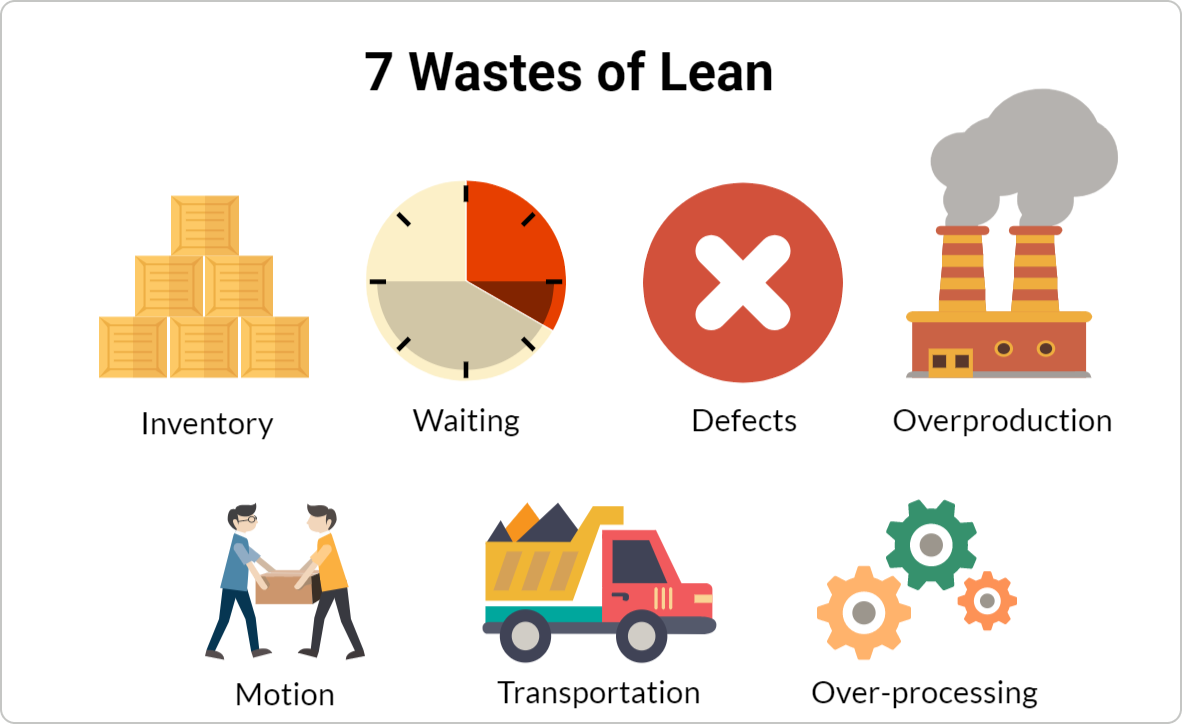
Lean 7 wastes

7 wastes (Muda)

Session 3 / Kanban Guide / Pull System 12 / 23 · Section 03

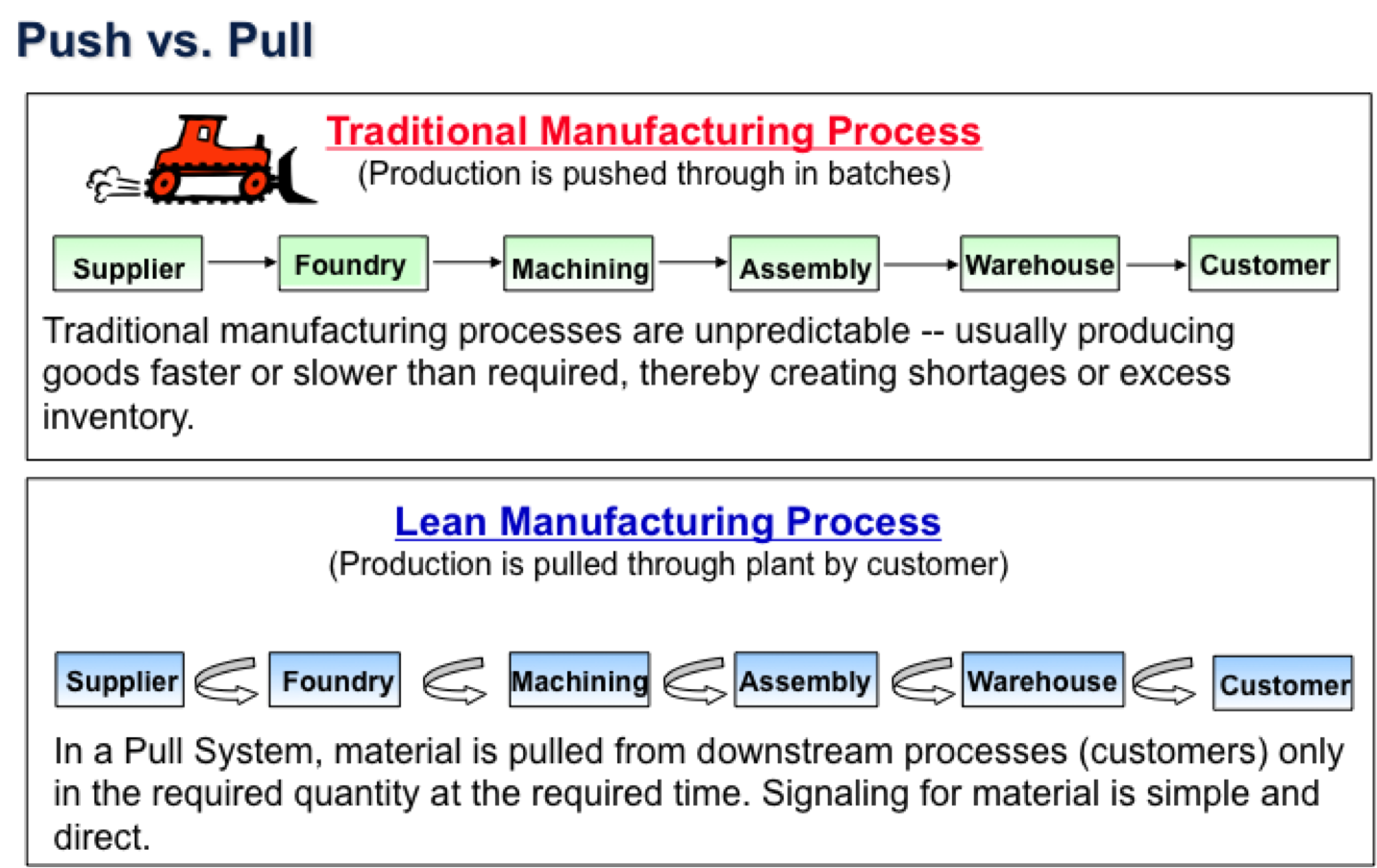
Pull system

Pull system — work is pulled by demand, not pushed by schedule
Session 3 / PDCA or Deming cycle 13 / 23 · Section 03

PDCA — improve in loops, not in one big event

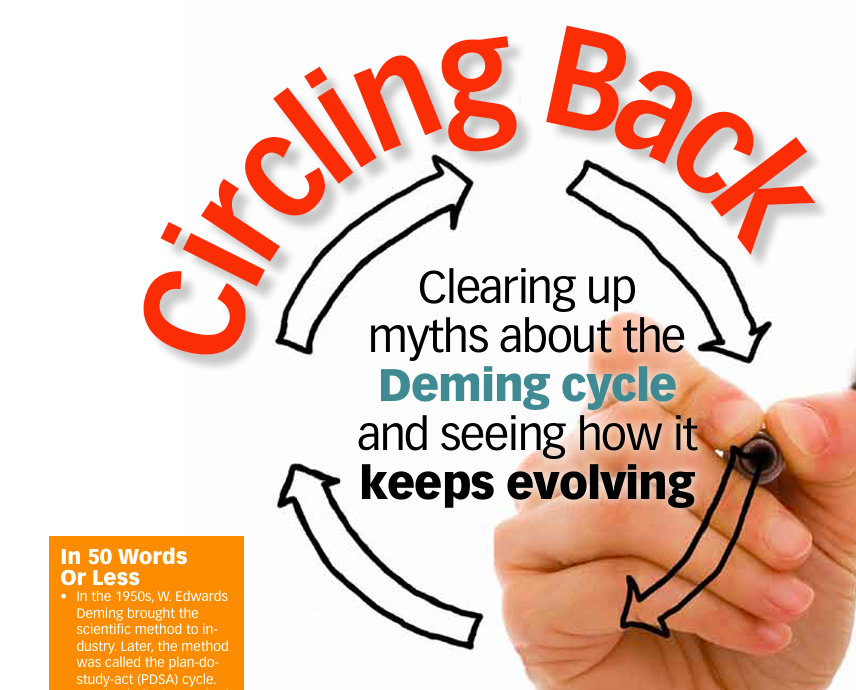
PDCA (Plan–Do–Check–Act) — also called the Deming cycle — is the engine that makes improvement continuous instead of a one-time event.

  • PPlan — pick one change to relieve the bottleneck (a handoff policy, a WIP limit, a clearer owner).
  • DDo — run the change next week on the same real project.
  • CCheck — did the pile shrink? Did wait time at that stage drop?
  • AAct — if yes, keep it and find the next constraint. If no, adjust and loop again.
Lessons learned, reframed
They don't wait for project close — they live in next week's plan: what Check revealed → what Act changed.
The PDCA (Deming) cycle — Plan, Do, Check, Act arranged as a continuous improvement loop
Session 3 / PDCA vs PDSA 14 / 23 · Section 03

PDCA vs PDSA — when Check becomes Study

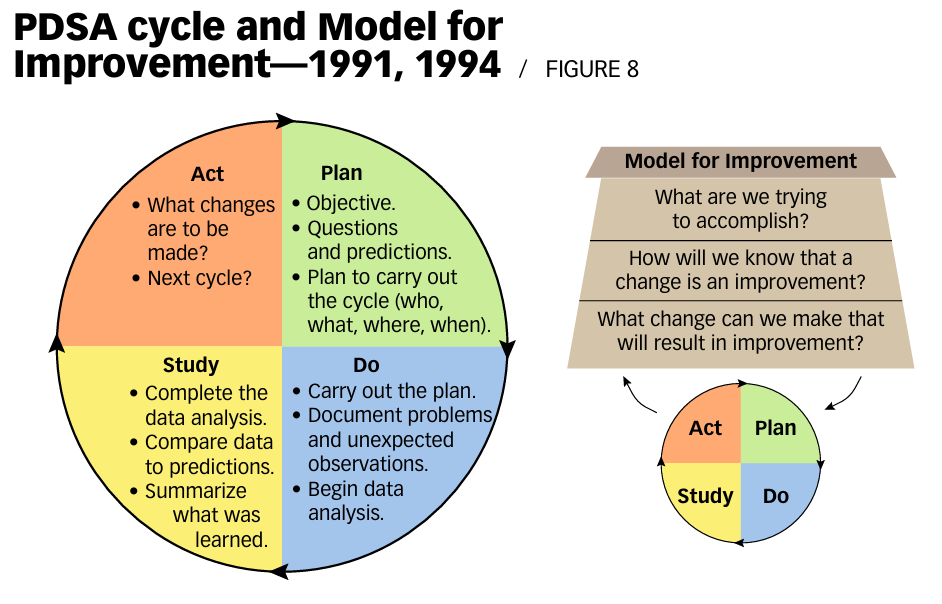
Deming insisted the two are not the same. PDSA swaps step 3 — Check becomes Study — and that one word changes the intent.

  • CCheck (PDCA) — did it pass or fail? A quick inspection against the target.
  • SStudy (PDSA) — why did we get this result? Compare against your prediction and build lasting knowledge.
Deming, in his own words
"The Deming circle is for management … the QC circle is for a group of people that work on faults encountered at the local level" — they "bear no relation to each other."
The PDSA cycle — Plan, Do, Study, Act — Deming's loop for management, distinct from PDCA
Session 3 / Planning in layers 15 / 23 · Section 03

Keep moving — improve in loops, plan in layers
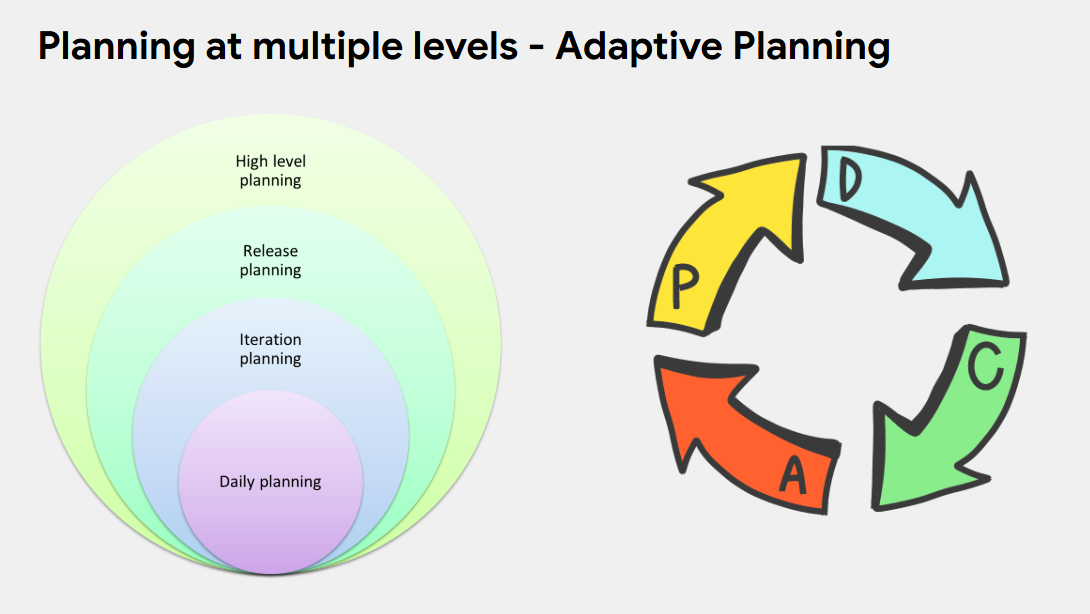
Planning at multiple levels — nested high/release/iteration/daily circles and the PDCA cycle
Session 3 / Planning in layers 16 / 23 · Section 03

Each layer — a different size, a different conversation

Just-in-Time
Requirements Breakdown
More Definition
High-Level
Epic
Medium
Feature A
Feature B
Small
Story 1
Story 2
Story 3
Detailed
Tasks
Business Rules
Unit Tests
Activity Diagrams
Acceptance Tests
Discussion
Which layer do you currently plan at — and which stakeholders are you not reaching because the detail doesn't match what they need?
Session 3 / Wrap 17 / 23 · Section 03

Wrap & what comes next

Three sessions in: a shared language for projects, PM toolkit to run one well, and now the habit that keeps the system improving.

Next Monday — Take Action
Pick one tool in PM toolkit (Project Charter, Project Canvas, Governance Framework, RAID log, RAG) to solve the top bottleneck.
What comes next — after the course
Weekly/ Monthly reflection. Observe the results of your actions and adjust accordingly.
Try AI i.e. business brain layer over IMC's own knowledge -- managers can ask.
Session 3 / IMC PM Survey 18 / 23 · Section 03

IMC PM Survey

IMC PM Survey — IdeaBoardz retrospective board
ideaboardz.com/for/IMC Survey/5780562 — click to open the live board
Session 3 / Generative AI / Definition 19 / 23 · Section 03

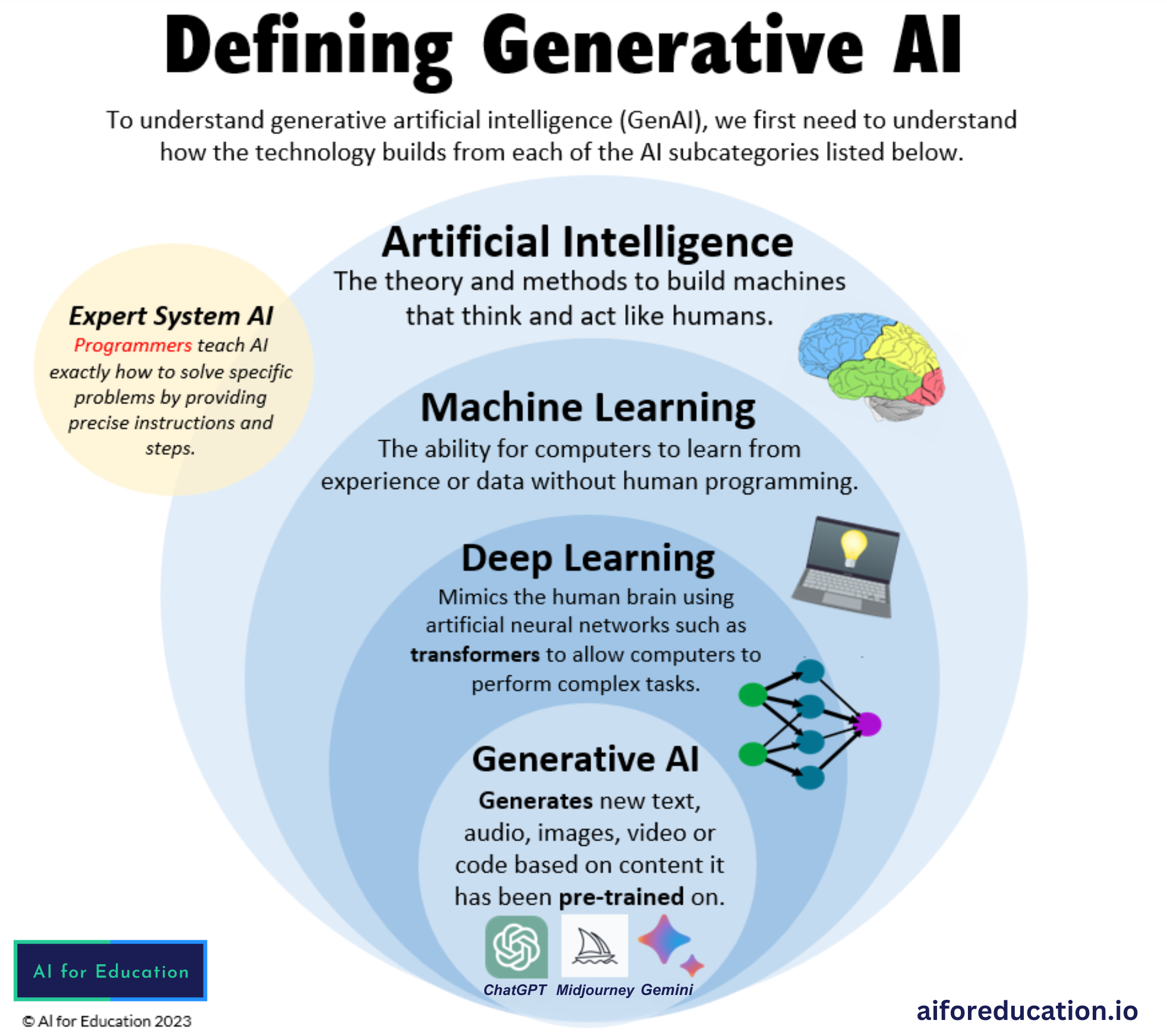
Generative AI definition
Session 3 / Generative AI / Deterministic to Probabilistic 20 / 23 · Section 03

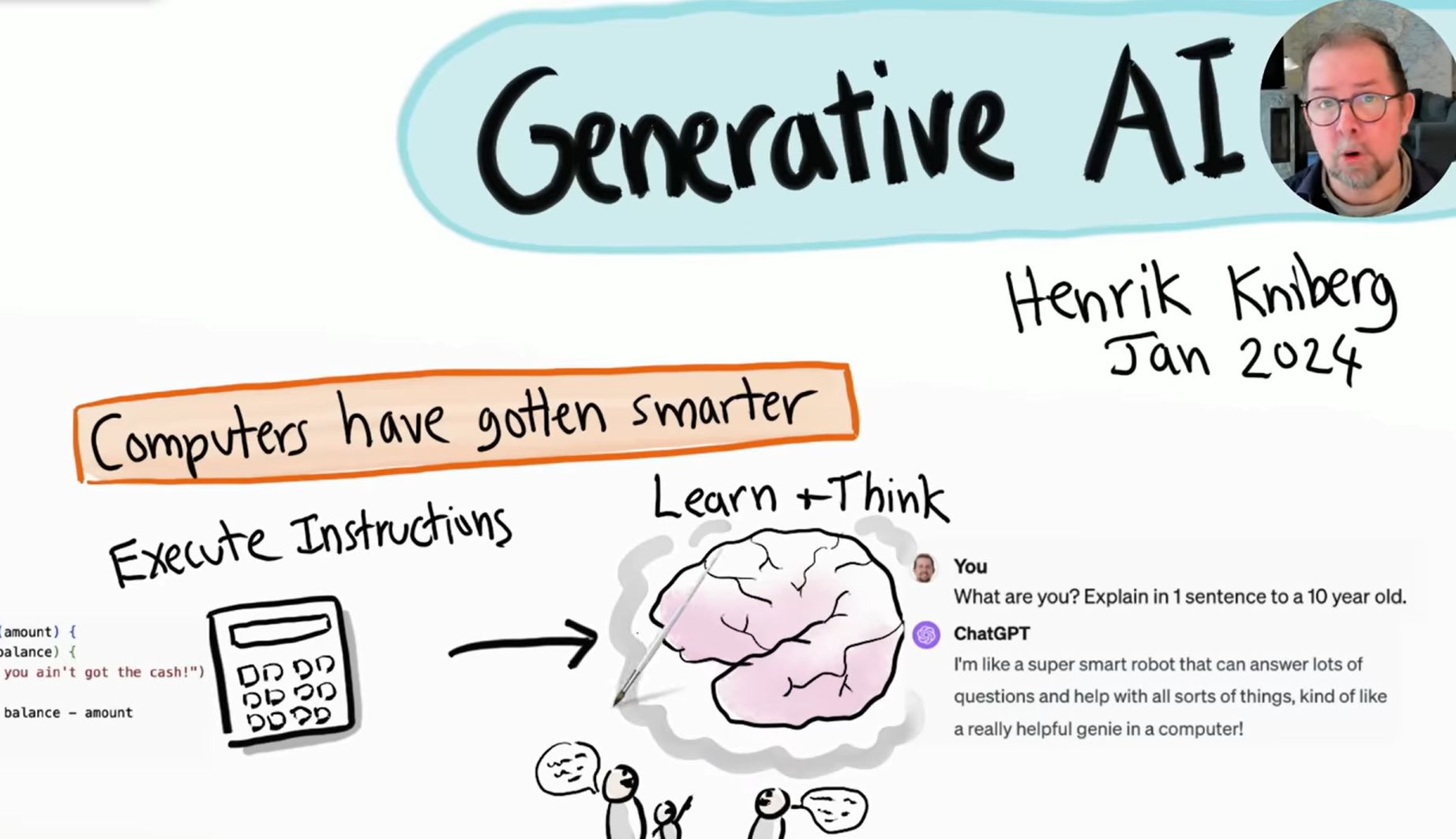
Deterministic → Probabilistic

From deterministic to probabilistic — how generative AI differs from traditional software
Generative AI in a Nutshell — youtube.com/watch?v=2IK3DFHRFfw
Session 3 / Generative AI / Einstein in your hand 21 / 23 · Section 03

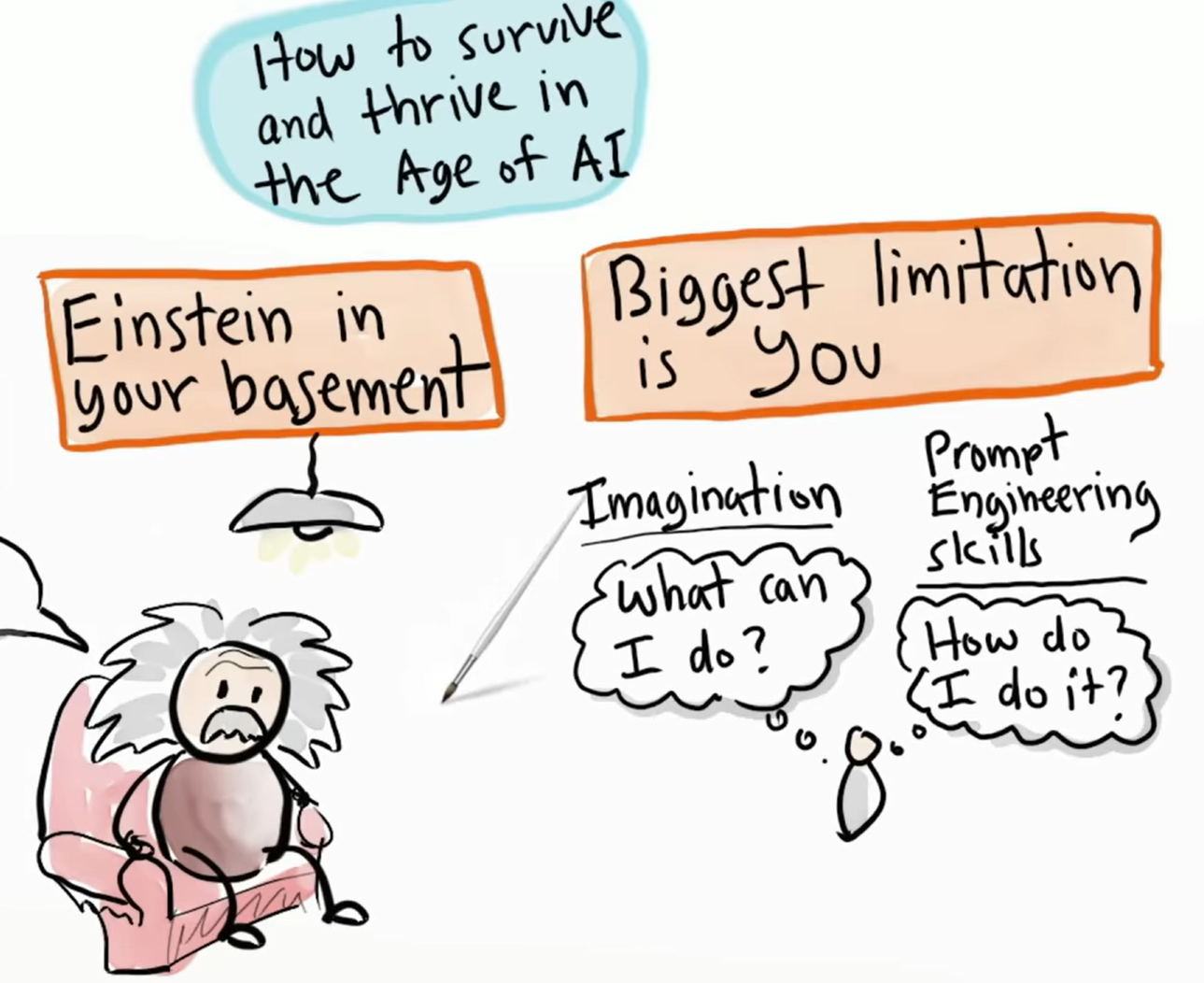
Einstein in your hand

Einstein in your hand — on-demand access to expert-level intelligence
Session 3 / Generative AI / Numbers & Math 22 / 23 · Section 03

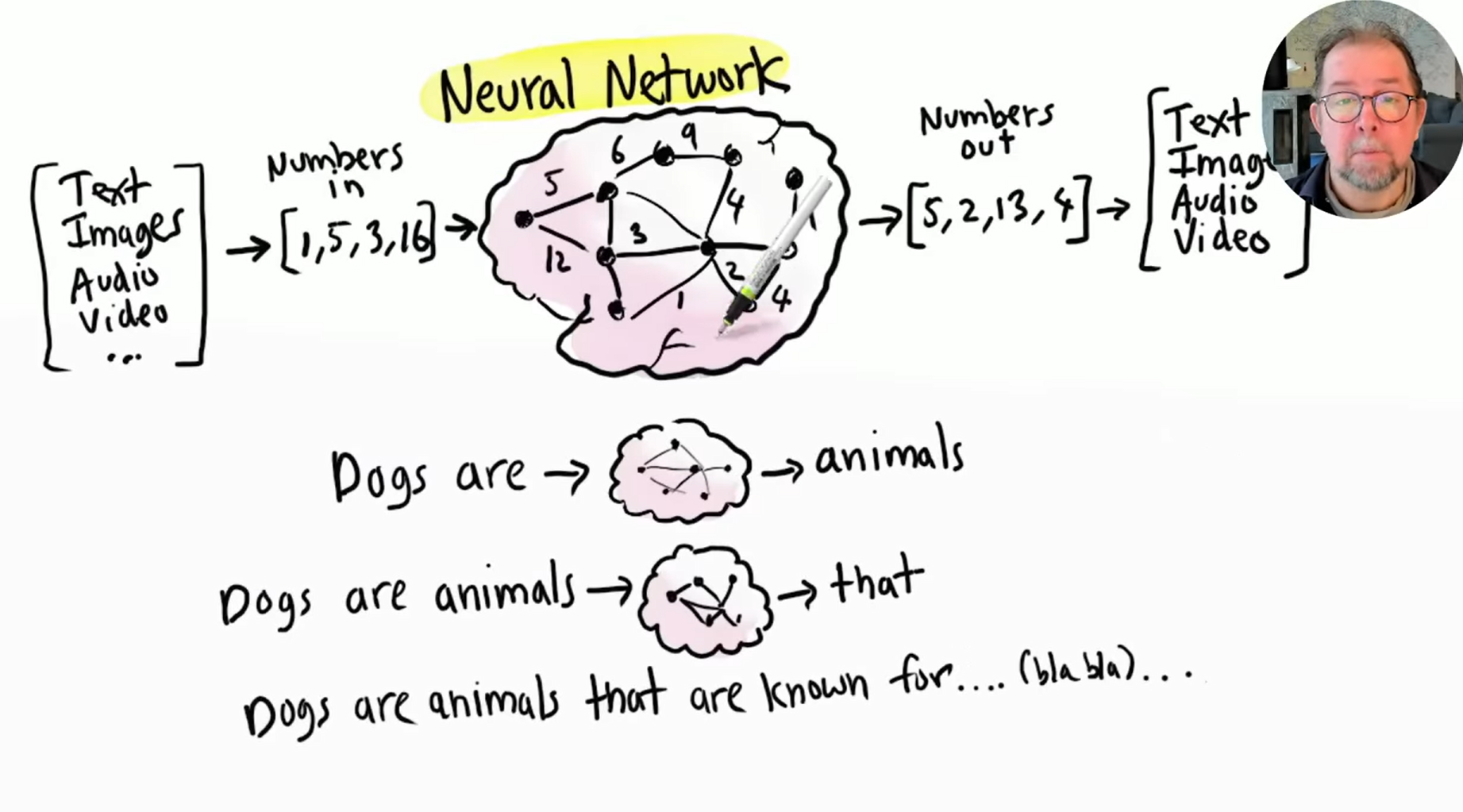
Numbers & Math are behind the scene

Numbers and math behind the scenes — text is converted to numbers processed by a neural network
Session 3 / Generative AI / How it's trained 23 / 23 · Section 03

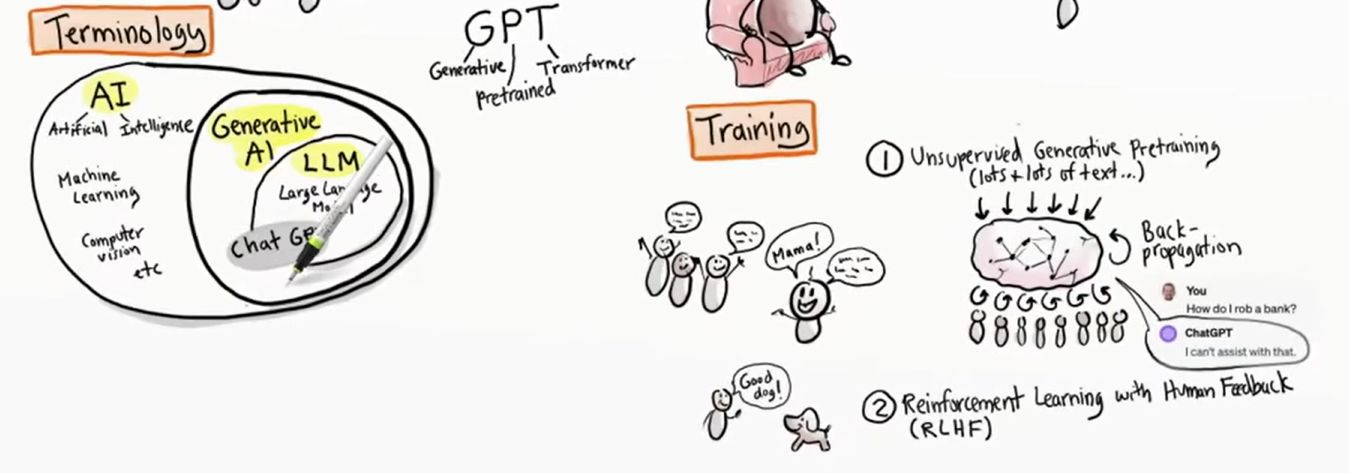
How it's trained

How a generative AI model is trained — guess-the-next-word, back-propagation, and RLHF