Session 2 / The Toolkit
1 / 29 · Section 02
Field Guide · v1.0 · Session 2
The PM Toolkit
Tools to manage ONE project well.
June 2026 · 3 hours · onsite at IMC
Anh Vu · PMP · devops4pm
Session 2 / Outcomes
2 / 29 · Section 02
By the end of this session
Three things — a map for how to think, a
lens for what to watch, and a toolkit for Monday morning.
- 01PM Map — how a PM thinks (Mindset), which delivery
approach to use (Predictive · Adaptive · Hybrid), and 5 focus areas.
- 027 Performance Domains — Governance · Scope · Schedule ·
Finance · Stakeholders · Resources · Risk
- 03A toolkit for IMC — 4 lightweight tools you can use
Monday morning: Charter/ Project Canvas · Governance · RAID · RAG report.
The Flow
From the big picture
Project Dashboard zoom in >>
1 Project Status.
Session 2 / PM Map
3 / 29 · Section 02
PM Map — PMBOK, adapted to IMC
PMBOK gives a universal standard. The PM Map
adapts it to IMC's context — how a PM thinks, which approach to use, and where to put attention.
PM Mindset
How a PM thinks — problem-first, clarity as a deliverable, rhythm over heroics. The habits that make tools
actually stick.
PM Approaches
Predictive · Adaptive · Hybrid. Pick the delivery approach that fits the project's certainty — not the
fashionable one.
5 Focus Areas
Initiation → Planning → Execution → Monitoring → Close. Each phase demands a different PM focus.
The whole standard on one sheet
Project Management in 1 page distils PMBOK 8 into a field
guide you keep beside you. The next slides walk
each layer of the map.
Session 2 / PM Map / PM Mindset
4 / 29 · Section 02
PM Mindset — values
Values that anchor the PM Mindset
Session 2 / PM Map / PM Mindset
5 / 29 · Section 02
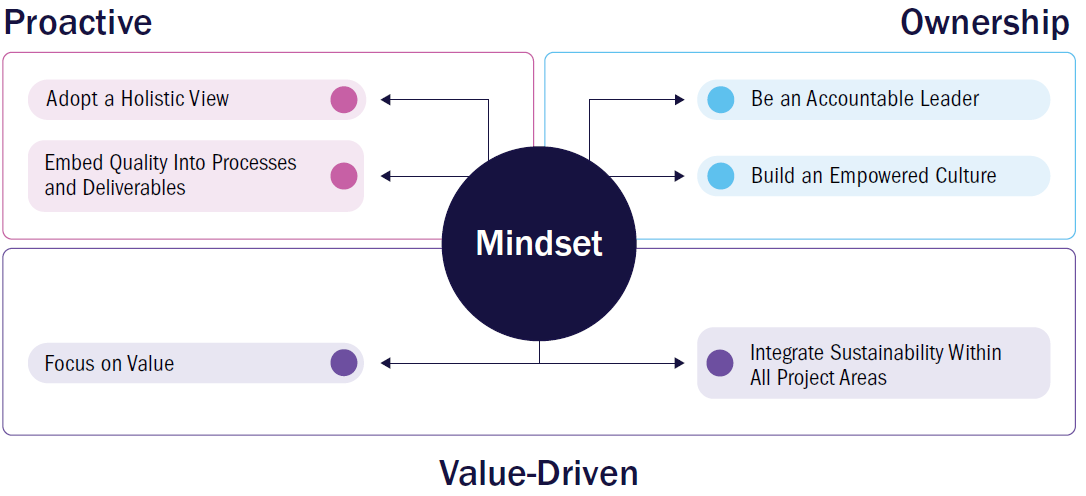
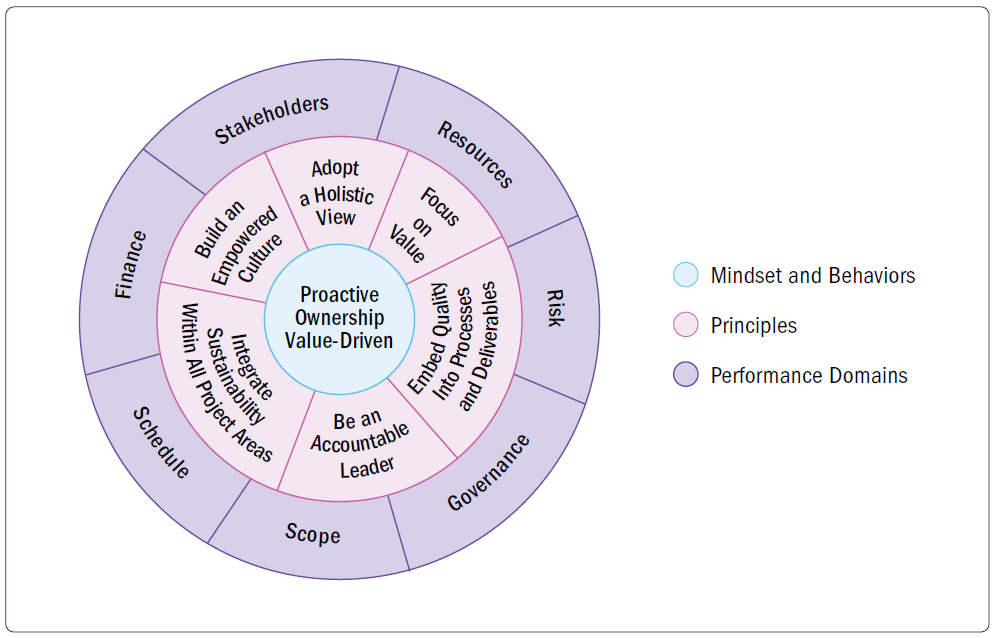
3 dimensions of PM Mindset
Proactive
Holistic View: see the whole system not just local optimum.
Embed Quality in Process: start work with clear end goal/Definition of done.
Ownership
Accountable Leader: take ownership of actions, outcomes, and results.
Empowered Culture: care for people & team development.
Value-driven
Focus on value: delivering value to stakeholders is the ultimate goal.
Sustainability: care for people, society and the environment.
Connect to IMC's values
Group question: How do PMs, leaders know project teams have an empowered culture?
Identify
specific signals/ behaviors of high-performing culture?
Are your teams able to raise risks/ issues/ concerns
early?
Or stakeholders only know when the project is late? or something is wrong?
Session 2 / PM Mindset / Case Study
6 / 29 · Section 02
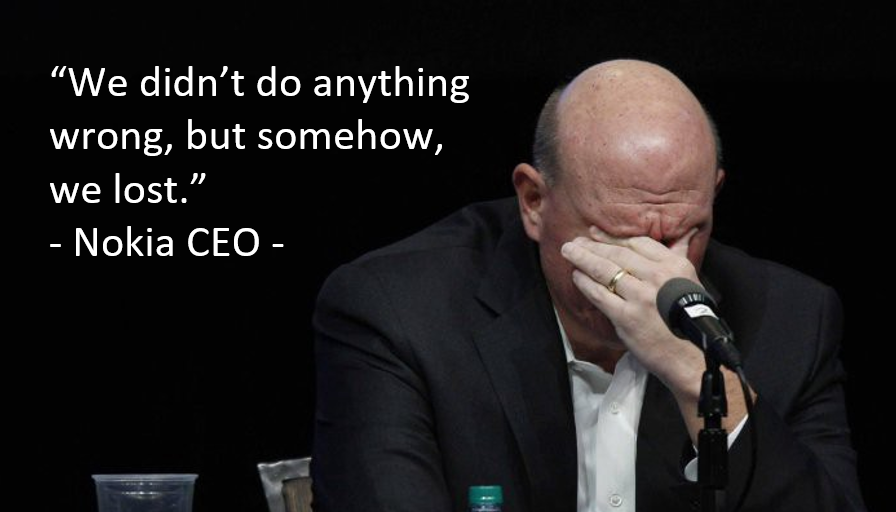
Group Discussion — the Nokia case study
"We didn't do anything wrong, but somehow, we lost." — Nokia CEO
Session 2 / PM Mindset / Case Study
7 / 29 · Section 02
The final steps of the Giant
- 2007N95 smartphone — music, GPS, large screen, full web
browsing. Software compromises were accepted to ship on time. It was a success — but serious
quality problems soon emerged.
- 2008The 5800, first touchscreen phone. A commercial
success, but about "one and a half years late" — because of software development
problems.
- 2009The N97 launched. One top manager admitted: "a total
fiasco in terms of the quality of the product."
- 2010The purported "iPhone killer" touchscreen — one year
late, underperformed in usability, and failed to match the sleek competition of iOS and
Android.
- 2011A new CEO decided Nokia would be better off buying software from
elsewhere — and formed an alliance with Microsoft.
- 2013The move accelerated the decline; Microsoft acquired Nokia's
phone business.
Session 2 / PM Mindset / Case Study
8 / 29 · Section 02
Your turn — diagnose & decide
Discuss — the causes
What were the
causes of Nokia's failure? List the ones that a PM could have seen — or
influenced — early.
Scenario
If you were the CEO of Nokia in 2007, what would you do to prevent Nokia from collapsing?
Be ready to share your
solutions — and the one decision you'd make first.
Session 2 / PM Mindset / Case Study
9 / 29 · Section 02
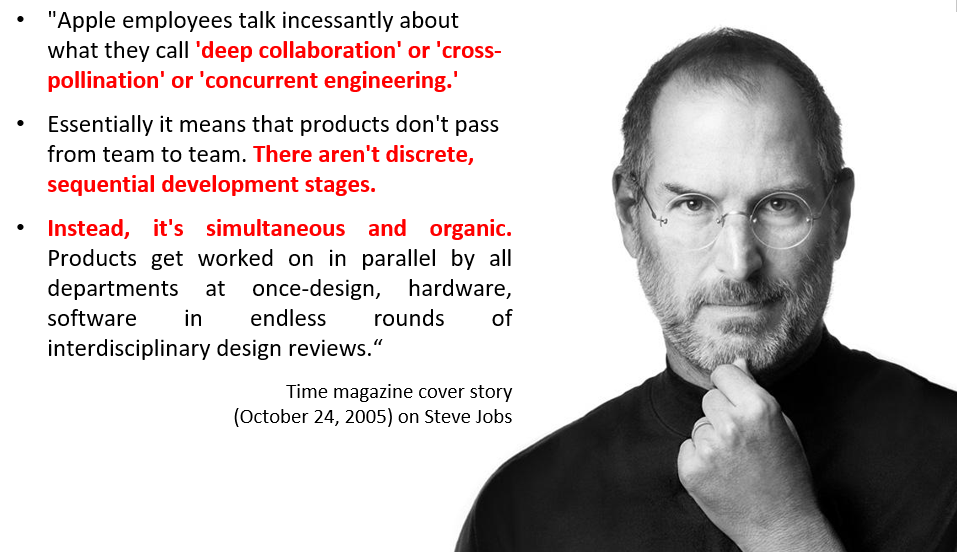
Meanwhile — how Steve Jobs & Apple worked
Same decade, opposite playbook — experience first, then iterate
Session 2 / PM Mindset / Case Study
10 / 29 · Section 02
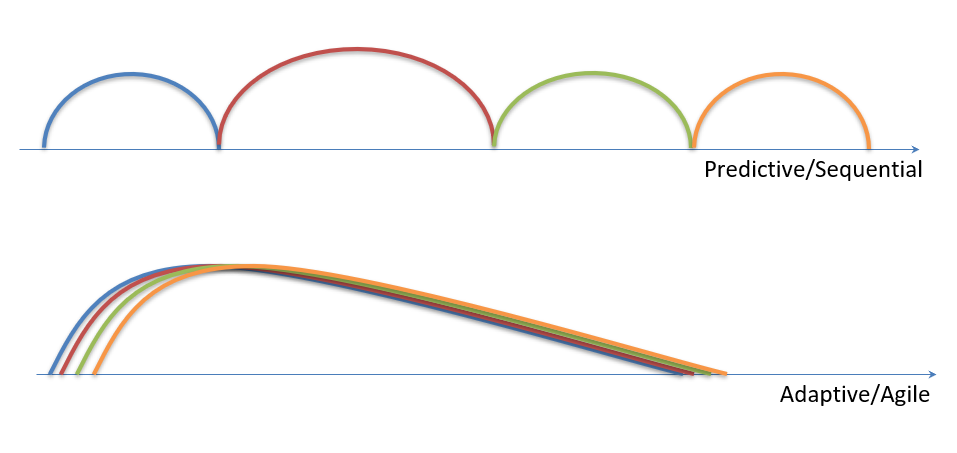
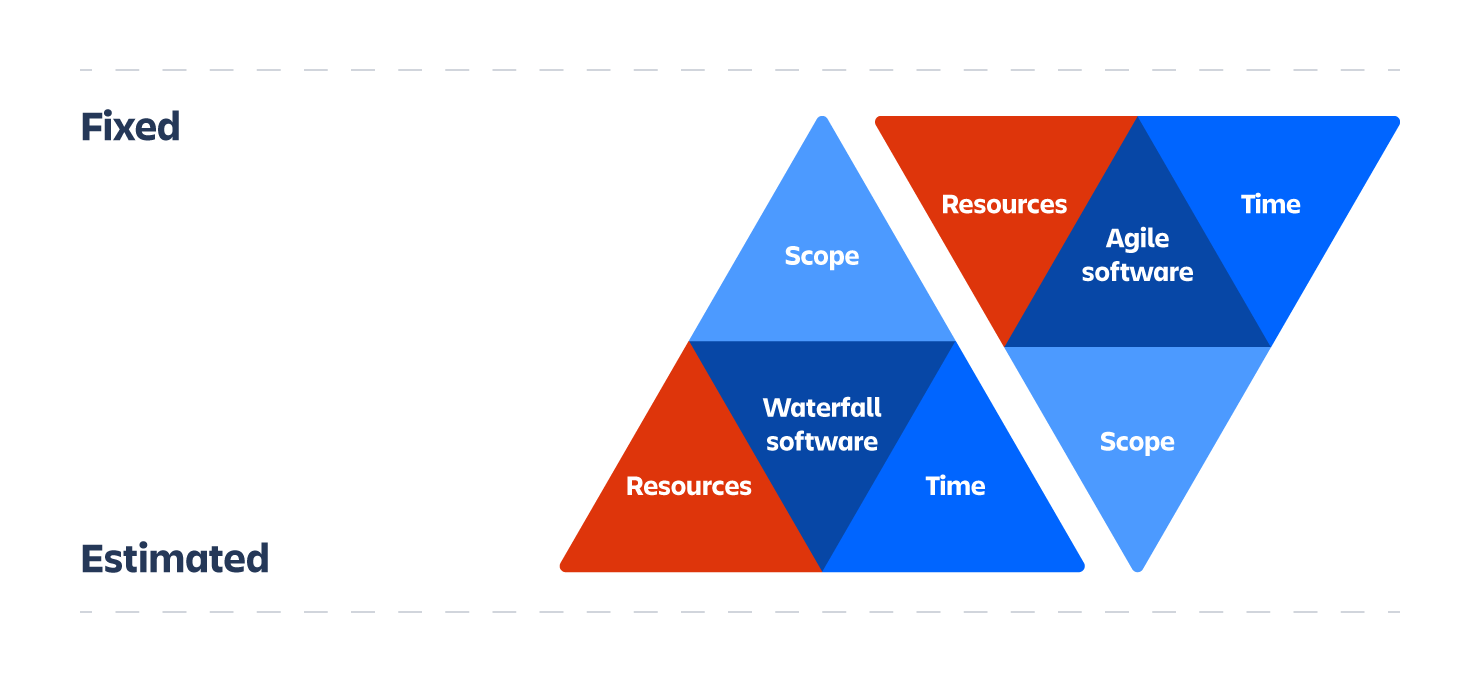
Two development approaches
How you build — plan-up-front vs iterative & incremental
Session 2 / PM Map / PM Approaches
11 / 29 · Section 02
PM Approaches — fit the method to the project
There is no single "right" way to run a
project. PMBOK 8 names three delivery approaches.
PM needs to pick the one that fits specific project.
Predictive
Plan-driven. Scope fixed up front, delivered to plan. Use when scope is clear and a late change is costly.
Adaptive
Agile / iterative. Scope evolves, delivered in increments. Use when scope is uncertain and change is cheap
and expected.
Hybrid
Mix the two — a predictive frame with an adaptive build. The realistic default for most IMC projects.
How to choose
Is the scope clear and stable? · How costly is a late change? · Can stakeholders
engage frequently?
Session 2 / PM Map / PM Approaches
12 / 29 · Section 02
PM Approaches — the differences
Predictive · Adaptive · Hybrid — key differences at a glance
Session 2 / PM Map / PM Approaches
13 / 29 · Section 02
PM Approaches — hybrid in practice
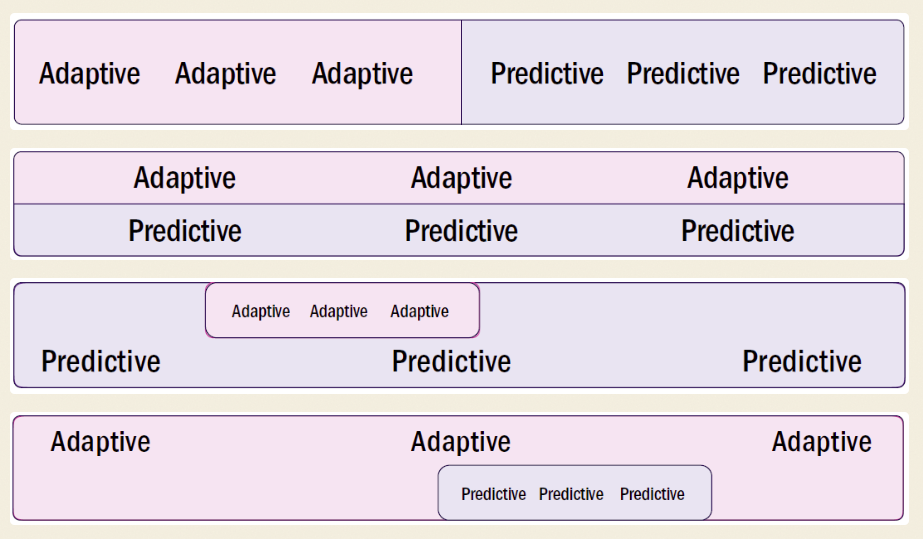
Hybrid — a predictive frame with an adaptive build
Group Discussion
Pick 1 running project from your team.
- Which parts of the scope should be Predictive?
- Which parts should be Adaptive?
- Why — what makes each part land on that side?
Be ready to share: the split, and the reasoning behind it.
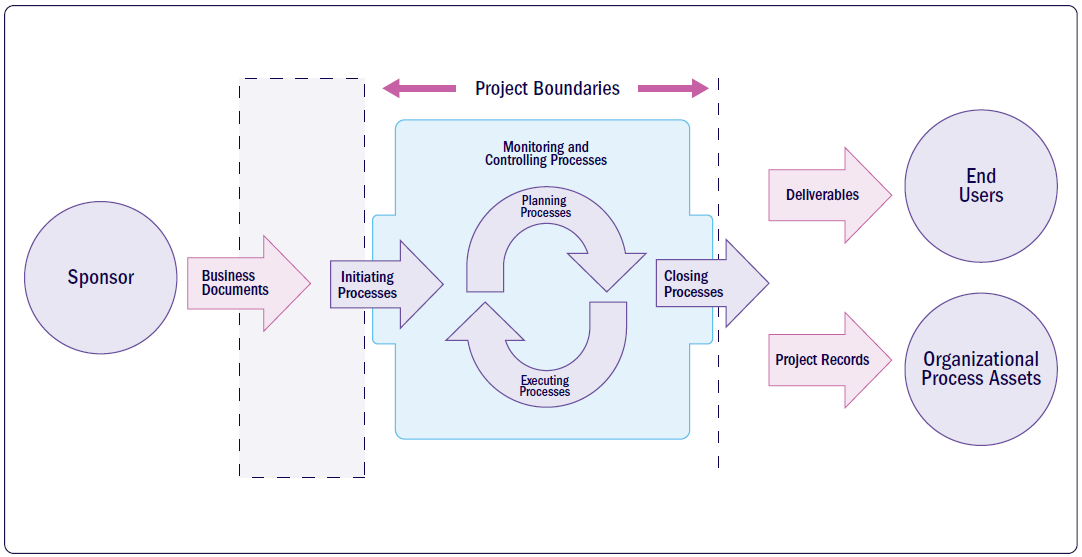
Session 2 / PM Map / 5 Focus Areas
14 / 29 · Section 02
5 Focus Areas — where attention goes
The PM's focus shifts as project progresses.
- 01Initiation — Authorize with official project
charter. Visualize Project Canvas.
- 02Planning — Define Approach, constraints (Scope,
Schedule, Finance, Resources), Risk
- 03Execution — Govern delivery, keep stakeholders
engaged.
- 04Monitoring & Controlling — Track constraints,
collaborate for prompt decisions.
- 05Close — handover, lessons/ knowledge management, formal
sign-off.
Question?
Are they 5 phases happen in order?
Session 2 / PM Map / 5 Focus Areas
15 / 29 · Section 02
5 Focus Areas — visual overview
PM Map — 5 Focus Areas across the project lifecycle
Session 2 / 7 Performance Domains
16 / 29 · Section 02
7 Performance Domains — the lens
PMBOK 8 — Mindset · Principles · 7 Performance Domains
Session 2 / 7 Performance Domains / Stakeholders
17 / 29 · Section 02
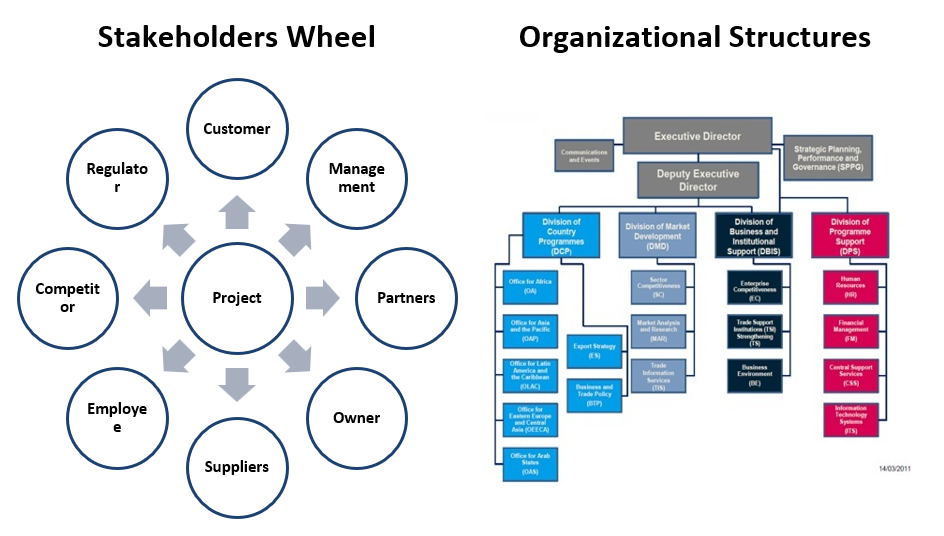
Stakeholders: who are stakeholders?
Stakeholders — who has a stake in the project
Session 2 / 7 Performance Domains / Stakeholders
18 / 29 · Section 02
Group discussion
Group Discussion
Discuss how to engage & manage the 4 stakeholder
groups below.
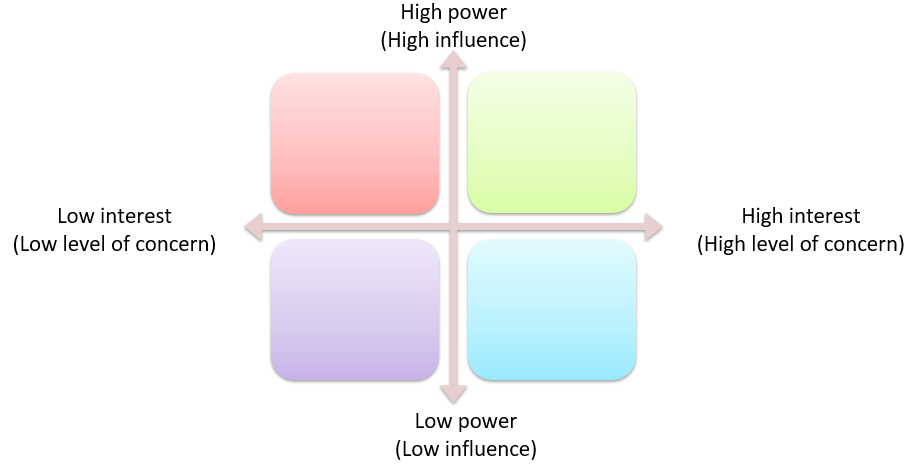
Power / Interest grid — 4 stakeholder groups
Session 2 / 7 Performance Domains / Communication
19 / 29 · Section 02
Communication: the message
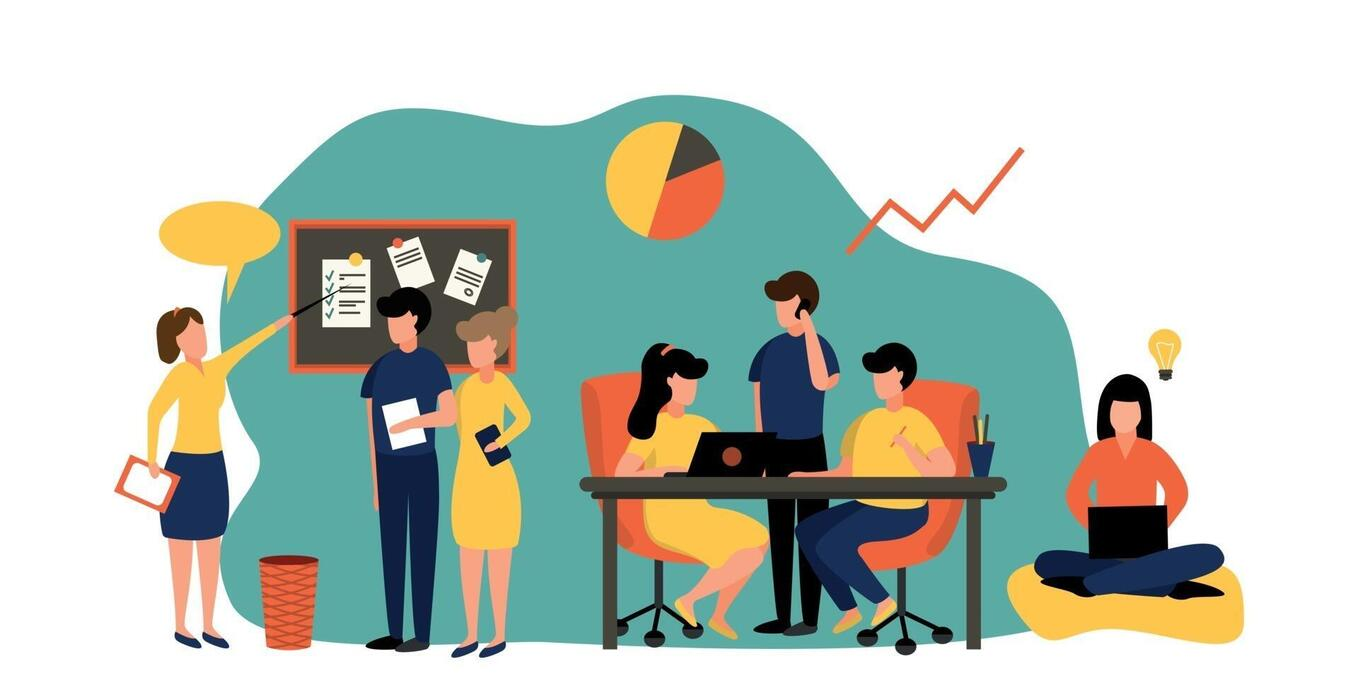
Thousand ways to communicate in our world today.
The project manager spends 90% of his time in communication.
The quality of your project is the quality of your communication.
Session 2 / 7 Performance Domains / Communication
20 / 29 · Section 02
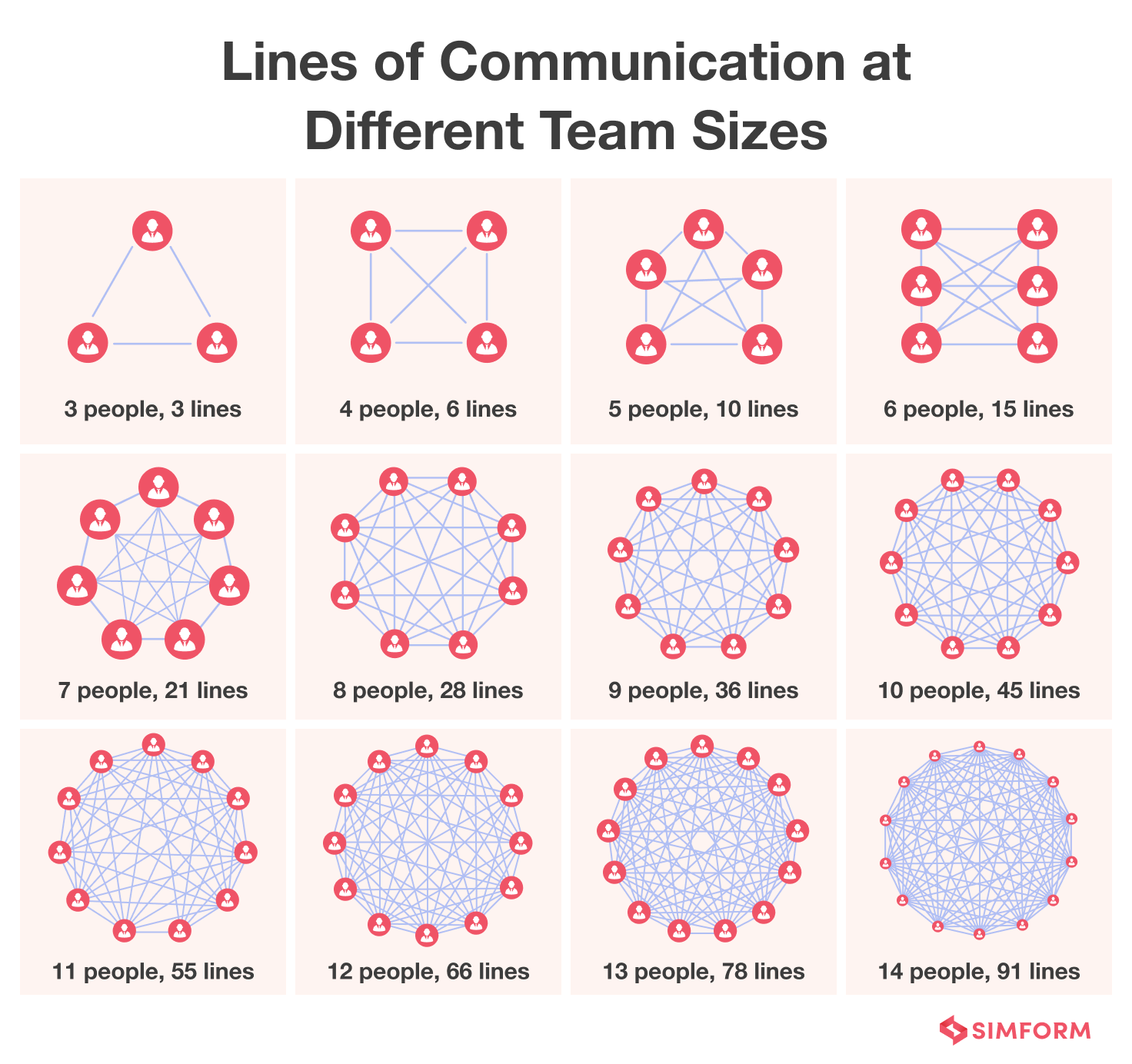
Communication Complexity
Communication complexity grows with the number of stakeholders
Session 2 / 7 Performance Domains / Governance
21 / 29 · Section 02
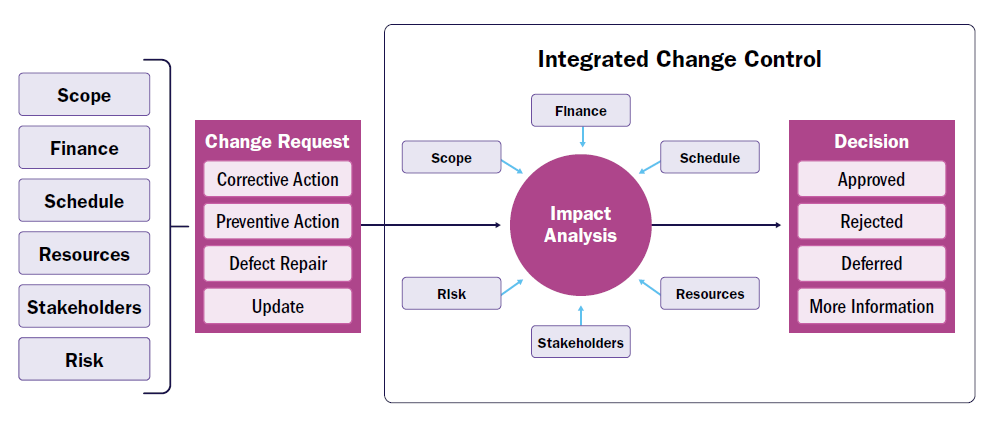
Governance — change control example
Session 2 / 7 Performance Domains / Scope
22 / 29 · Section 02
Scope — WBS example
Group Discussion
Build a WBS for one of your running projects.
- Which level does a PM use when talking with the team?
- Which level when reporting to a senior manager?
Be ready to share: your top 2 levels and the reasoning.
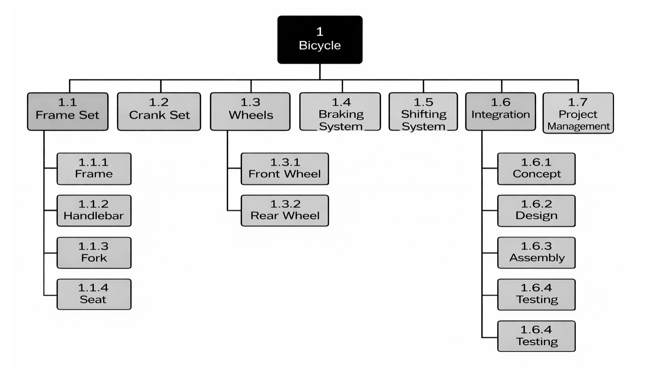
WBS — decompose scope into manageable work packages
Session 2 / 7 Performance Domains / Schedule
23 / 29 · Section 02
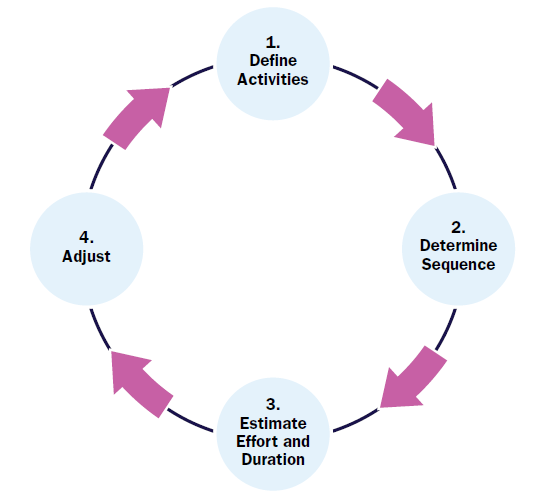
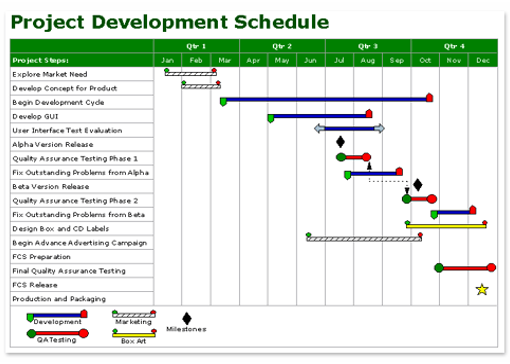
Schedule — steps & example
Session 2 / 7 Performance Domains / Finance
24 / 29 · Section 02
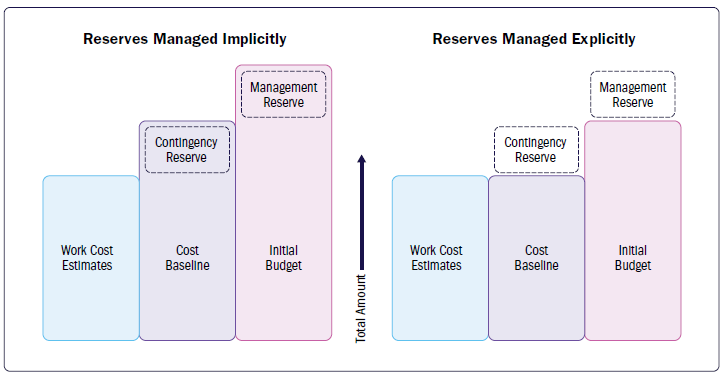
Finance — budgeting scenarios
Contingency Reserve
Buffer for
known risks — identified, estimated, and built into the project budget.
Management Reserve
Buffer for
unknown risks — unforeseeable events; held above the project baseline.
PM Authority
PMs may or may not have authority to release these reserves — depends on
org governance.
Session 2 / Toolkit for IMC
25 / 29 · Section 02
A toolkit for IMC — 4 lightweight tools
Big enough to work. Small enough that nobody has an excuse not to
use them. Each one feeds the RAG report you'll build later today.
Charter/ Canvas
Frames boundaries.
Governance
Names who decides.
RAID
Surfaces what's at stake.
RAG report
The weekly heartbeat.
The discipline
Resist the urge to make these bigger. A 1-page charter that gets read beats a 10-page charter that doesn't.
The tools work only when used in conversation, in real time.
Question: Is IMC using similar tools/ processes like above? Do they change over time?
Session 2 / Toolkit for IMC / RAID log
26 / 29 · Section 02
RAID log — what's at stake, in one place
A living tracker that goes beyond a plain
risk log — Risks · Actions · Issues ·
Dependencies, with Change folded in as a type.
- ›Columns: ID · type · description · likelihood / impact ·
owner · next action · due · status.
- ›Reviewed weekly at the project heartbeat. Flag the one dependency that is
your constraint.
- ›A mid-project spec change is logged here as a Change — so
it's tracked, not silent.
Feeds the RAG report
The top items — and the top 3 risks — roll straight up onto the
Risk dimension of the RAG
report.
Session 2 / Toolkit for IMC / RAG report
27 / 29 · Section 02
RAG report — the weekly status unit
One page, produced weekly. The three tools
above feed it; it's the PM's primary instrument for stakeholder visibility.
- ›Project name + 1-sentence outcome.
- ›R / A / G across Scope · Schedule · Cost · Risk ·
Resources.
- ›For each Amber / Red: one sentence on why + the named owner of
the next action. Plus top 3 risks + pending changes.
The chain
Red/Amber/Green is a
conversation starter, not a verdict. This 1-page unit is exactly what
rolls up into the S1 portfolio dashboard.
Session 2 / Activity — RAG Report
28 / 29 · Section 02
Activity — RAG Report
In your project group,
pick a real IMC project. Use the toolkit to build a 1-page RAG report — then share back across groups.
By project4–5 groups · one real IMC project each
15 minBuild the RAG report · Scope · Schedule · Cost · Risk · Resources
Share-backEach group presents: status + one decision needed
One servant leader per group
Not the manager — a peer who draws out every voice, keeps the report honest, and speaks for the group
at share-back.
Watch for — the honest colour
When groups compare, does the
same project show a different colour across dimensions? That
gap
is the conversation — not a mistake. Amber on Schedule means the next 5 minutes of the room.
Session 2 / Wrap
29 / 29 · Section 02
Wrap & what comes next
You now have the PM Map, the lens of the 7
domains, and a 4-tool toolkit to manage one project well. Session 3 turns that into a habit that keeps
improving.
Before Session 3 — required
Bring your RAG report to S3. We'll build on it. If you want to refine it during the week — better.
Next session — Session 3
Continuous Improvement. Spot your bottleneck (Theory of Constraints), run a Kanban board with
WIP limits, and one PDCA loop — with a commitment to one board + one cycle on a real project next week.
Session 3 · June 2026 · 3 hours · onsite at IMC